Daily Supplement Habits
Magnesium, Recovery, and the Rhythm of a Morning Stack
Marcus Chen
·
·
9 min read

Of the nutrients most frequently examined in the context of men’s physical output, creatine monohydrate carries perhaps the largest volume of published research. The consensus that has formed across decades of study is notable for its relative consistency — a quality not easily found in the nutritional supplement literature. This editorial review surveys what that record describes, what it leaves unresolved, and how the findings translate into the practical context of a men’s supplement routine.
Creatine monohydrate is among the most studied ergogenic nutrients in the published literature. The body of research spanning the early 1990s through to the mid-2020s represents a relatively sustained scientific interest, covering a range of populations, activity types, and observation periods. The consistency of the positive association between creatine supplementation and short-duration, high-intensity physical output is a feature that distinguishes this nutrient from many others in the space, where research findings are frequently more mixed.
The proposed mechanism centres on the body’s phosphocreatine energy pathway, which supports the rapid regeneration of adenosine triphosphate (ATP) during short bursts of high-intensity activity — the kind that characterises resistance training, sprinting, and similar work. Increasing the available pool of stored creatine in muscle tissue is understood to support the efficiency of this pathway, particularly in the final sets or repetitions of a structured resistance session.
The research does not suggest that creatine supplementation transforms output in isolation. The nutrient supports physical output over time in resistance training routines — a modest but reliable contribution when the foundational habits of training, nutrition, and rest are already in place.

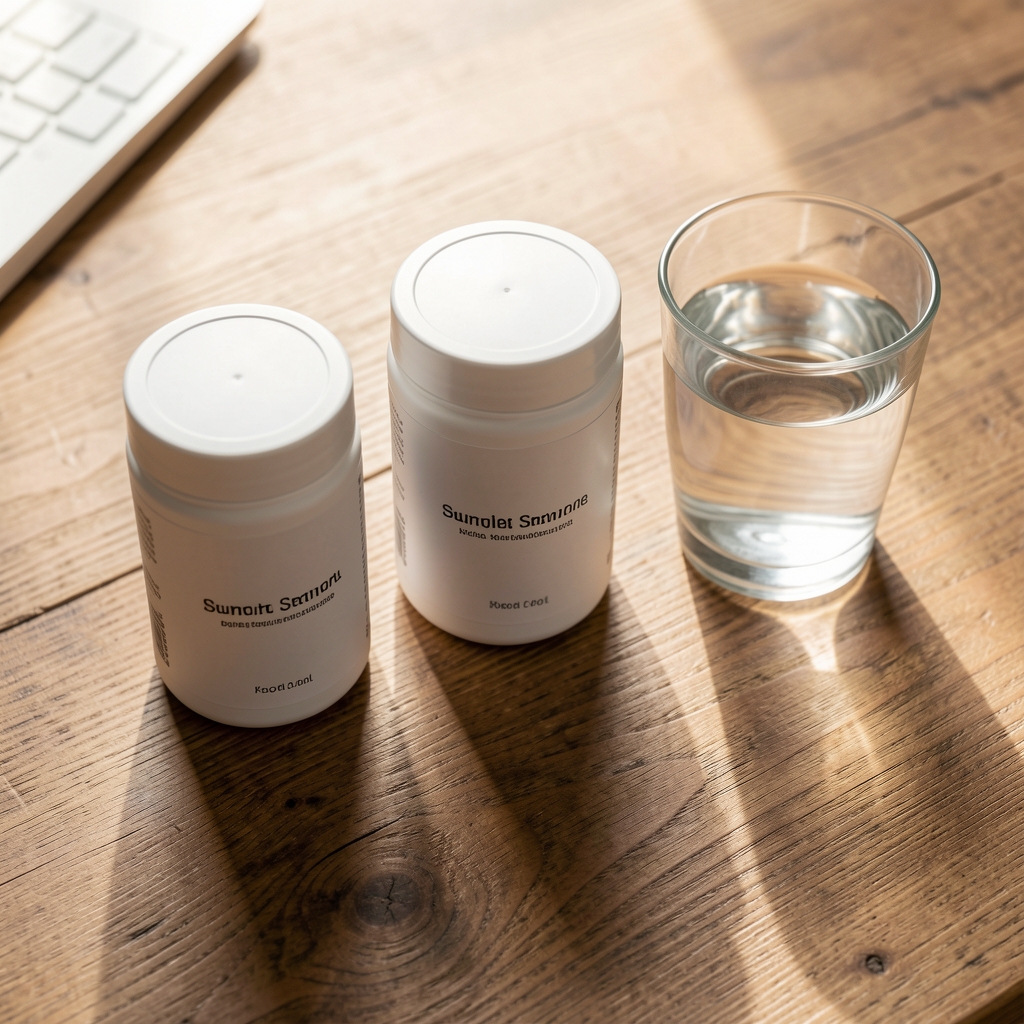
Supplement preparation setup. Jakarta, 2026.
The most consistently reported finding across creatine studies is an association with improved performance in high-intensity, repetition-based exercise. Studies examining resistance-trained adult males typically report modest but statistically significant improvements in total training volume — measured by the aggregate number of repetitions completed across a session — over periods ranging from four to twelve weeks of supplementation.
A secondary finding that appears with some regularity is an increase in measured body mass during the initial weeks of creatine supplementation. The published literature attributes this largely to increased intramuscular water retention associated with elevated creatine stores, rather than to the accumulation of new muscle tissue over short time frames. Over longer periods, the research suggests a modest contribution to lean mass development when supplementation is combined with consistent resistance training.
What the literature does not describe, with any consistency, is a strong effect on endurance-based activity — sustained cardiovascular work of thirty minutes or more. The energy pathway that creatine supports is principally relevant to high-intensity, short-duration efforts. Men whose primary activity is long-distance running or cycling, rather than resistance work, are less likely to find creatine supplementation relevant to their output patterns.
“Creatine supports physical output over time in resistance training routines — a modest but reliable contribution when the foundational habits are already in place.”
— Olarev Notebook Editorial Assessment, April 2026
The published literature on creatine serving covers two broad approaches: a loading phase followed by a maintenance phase, and a steady low-dose approach without a loading period. Both have been studied extensively, and the research suggests that both ultimately lead to similar levels of muscle creatine saturation — the loading protocol achieves saturation more rapidly, typically within five to seven days, while the steady-dose approach reaches saturation over three to four weeks.
The practical relevance of this distinction depends on the individual’s context. For men entering a period of consistent training who want to establish the habit and its associated benefits as efficiently as possible, a loading protocol may be appropriate. For men with a long-term supplement habit for whom creatine represents one component of a settled routine, the steady-dose approach produces comparable outcomes with fewer logistical considerations.
We recommend speaking with a qualified wellness or nutrition professional before introducing any new habit or routine to your daily life, particularly if you have specific dietary requirements. The observations here are editorial and should not be read as personal directives.

Pre-session preparation. Jakarta, 2026.
In the context of a broader daily supplement routine, creatine monohydrate sits comfortably alongside the foundational nutrients most commonly discussed in men’s nutrition — vitamin D, magnesium, omega-3, and protein. The published literature does not indicate any significant negative interactions between creatine and these commonly combined nutrients when consumed at the dosages typically described in the research.
The timing question — whether creatine is most effectively consumed pre- or post-training — has been examined in several studies. The findings are not definitive, and the practical guidance that emerges from the research is that consistency of daily intake is more important than the specific timing window. Taking creatine at the same point each day, whether that is morning, pre-session, or with an evening meal, is the more reliable practice than attempting to optimise the timing window based on contested research.
The editorial team’s summary assessment is that creatine monohydrate represents one of the better-evidenced nutritional supplements in the men’s physical performance space. Its research base is broad, its mechanism is understood, and its practical application is straightforward. For men engaged in consistent resistance training who are building or refining a supplement stack, it occupies a well-supported position in the published literature.
Content published by Olarev Notebook is selected based on published nutritional research and reviewed for editorial accuracy by a second editor before publication. For this review, the primary literature examined includes published meta-analyses and systematic reviews covering creatine supplementation in adult males, with a focus on studies published between 2010 and 2025. Where individual studies are referenced, they are drawn from peer-reviewed publications indexed in established nutritional science databases.
The editorial standards of this publication mean that no commercial relationship has influenced the selection of creatine as a subject, the framing of the research findings, or the conclusions drawn here. The publication does not endorse specific products or brands. The observations here are directed at the nutrient and the published evidence surrounding it — nothing more and nothing less.

Reza Pratama is a guest writer at Olarev Notebook based in Jakarta, Indonesia. His writing focuses on the practical application of published nutritional research for active men, with a particular interest in supplement habits and resistance training routines.
More from the notebook